A First Night Match: What to Watch as the Light Changes
A first night match is easier to follow when you notice how the light changes, compare your view across the pitch and keep track of team movement.
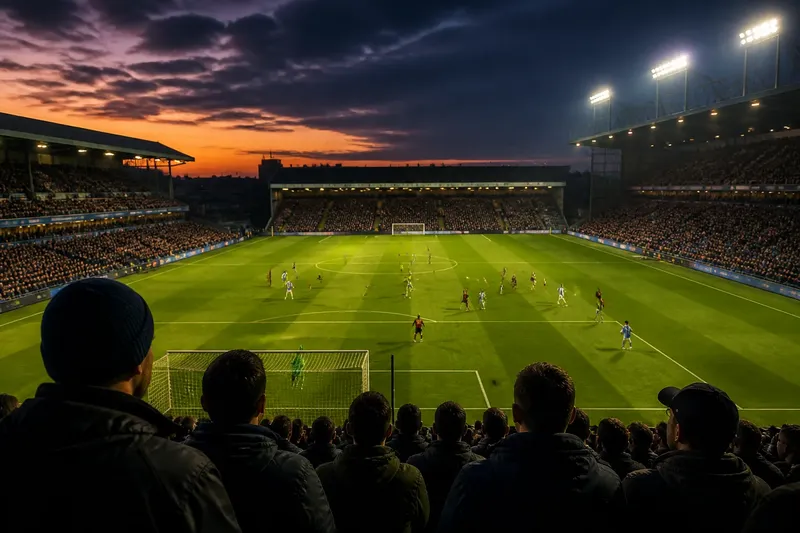
You find your seat while the last daylight still reaches the far touchline. As the referee starts play, the stands may glow under floodlights while the field looks different from one end to the other. At a first night match, noticing that change can help you understand what is easy to see from your seat.
Use these observations as a loose viewing plan, not a set of rules. Follow the match first, and treat the light as one part of your view rather than an explanation for every pass or mistake.
Notice what the stadium looks like before play
Before kickoff, take in the whole scene rather than trying to identify every player. Look at the pitch, the stands and the edges of the playing area; this gives you a reference point for later.
Check where the natural light is strongest. One side of the field may look warmer or brighter, while another is already in shadow. A roof, a high stand or nearby buildings can make those differences more noticeable, but they do not by themselves indicate a tactical advantage.
Also note where the floodlights are mounted and whether the whole field appears evenly lit from your seat. The far side may look flatter or harder to read than the near side, especially when players overlap in your sightline.
This first look is like glancing at a room before someone turns on a lamp: it gives you a sense of the space before the brighter source changes what stands out. There is no need to judge the lighting quality. Simply remember what you could see before the match began.
Watch the change in the sky without chasing it
As the sky darkens, glance up between moments of play or during a stoppage. Notice whether the field’s appearance changes gradually or seems to shift as the floodlights become more prominent. The transition may be subtle and may not happen at the same pace across the pitch.
Then look back to the grass. A ball can be easy to follow against a clear background, yet harder to pick out when it passes through shadow or in front of a crowded stand. The effect depends on your seat, the ball’s path and the surrounding colors, so treat it as something you notice rather than a universal feature of night games.
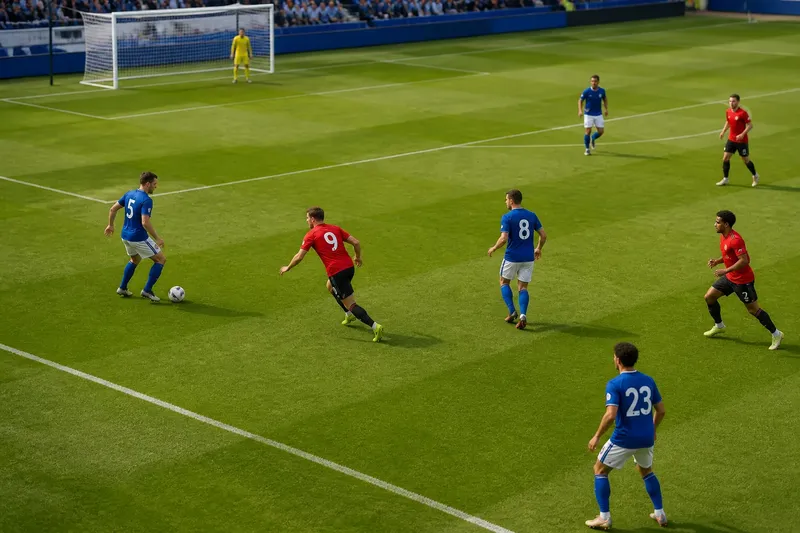
Pay attention to the players’ outlines as well. Dark kits can blend into a shadowed background, while pale kits may stand out more clearly. Your viewing angle matters: a combination that is clear near you may be less distinct at the far end.
You do not need to monitor the sky continuously. A quick comparison during a throw-in, substitution or break in play is enough to register whether the view has changed. Then return your attention to the players’ movement.
Track the move before the ball reaches the final third
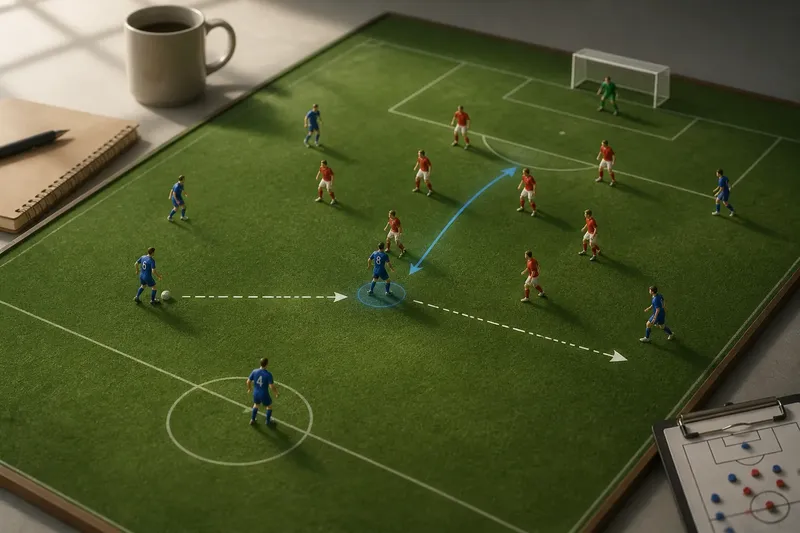
When play settles, follow one attack from its beginning instead of watching only the ball near the goal. Notice who receives possession first, who offers a short option and who moves into space farther ahead. From a seat where you can see much of the field, these actions help reveal a team’s shape.
As the evening grows darker, the ball may draw your eye because it is moving quickly. Resist that pull for one sequence and look just beyond the player in possession: a teammate might be checking back, holding a wide position or moving behind a defender. Those off-ball actions can explain why a pass is available before it is played.
Then follow the ball again and see whether the intended route was easy to read. A pass toward the touchline may travel through open grass, while a central pass can disappear briefly among legs and overlapping players from some seats. This is a question of what you can see, not proof that the player made a poor choice.
If you lose the ball against the background, use the players’ reactions to locate it. A turning head, a sudden sprint or a defender stepping forward can point you toward the next phase. This keeps you with the action without asking you to scan every part of the field at once.
Compare how the two ends look from your seat
A match changes direction at halftime, so your view of the teams’ attacks changes too. A goal, a wide run or a goalkeeper’s clearance may be easy to read at one end and harder at the other. Notice whether the difference seems to come from distance, the angle of the stand, background contrast or the way the floodlights reach the area.
For a simple comparison, choose one repeatable feature, such as how clearly you can see the goalkeeper’s position during a build-up. Observe it when each team has the ball at the same end of the field. If one view is harder to follow, the cause may be your line of sight rather than anything unusual about the team’s play.
You may also notice the goalkeeper’s communication. A raised arm, a step forward or a gesture toward a defender is visible, but it does not tell you exactly what was said or why the defense adjusted.
Imagine you are seated behind one goal and find that long passes toward the far corner are hard to track. At halftime, the teams switch ends; you compare a similar pass in the opposite direction and notice that the ball is easier to follow against the new background. The result is a clearer sense of your own sightline, not a conclusion about which team passes more accurately.
Use pauses to reset your view
A goal celebration, an injury stoppage, a substitution or a ball out of play gives you a natural pause. Use one of these moments to look across the whole pitch. Ask where each team has placed its defenders and whether the players are spread wide or crowded around the ball.
That brief reset can help after a fast passage, when attention may have narrowed to the player carrying the ball. Looking toward the far-side defenders may show whether they have pushed up, dropped deeper or shifted across. These positions give context to the next attack without requiring you to predict what will happen.
Stoppages also make it easier to register the sound of the stadium. Crowd noise can rise around a dangerous attack, a challenge or a decision, but it does not tell you exactly what has happened. Look at the referee, players and assistant referee to connect the reaction with the event on the field.
Keep the reset short. A match can restart while you are still taking in the scene, so return your attention to the ball and the players around it.
Notice whether the opening becomes easier to read
Early passages can feel busy because both teams are finding their shape and you are adjusting to the stadium. Choose one visible pattern to follow: which defender usually starts an attack, whether a midfielder comes close to receive, or whether a forward stays high while teammates bring the ball forward.
Look for repetition, not a single instance. A player may move into space because of one particular moment; seeing the same movement again gives you a clearer picture of a team’s preferred route. The light may make a player easier to see, but it does not explain the team’s intention by itself.
When the ball is near the touchline, notice how players space themselves around it. A teammate might offer a short pass, another might wait farther forward, and an opponent may position themselves to block the route back inside. From a high seat, these relationships can be easier to see than the ball’s finer details.
Say you settle into your seat while the warm-up is ending and choose to follow the left-sided defender once play begins. You notice that a nearby midfielder comes short during one build-up and again during another, giving the defender a familiar passing option. The result is a clearer sense of how that side starts attacks, even if the changing light makes the ball harder to track for a moment.
What is harder to see, and what remains clear?
Does the floodlighting change the players’ decisions?
The view from the stands cannot tell you what a player can see or how lighting affects a decision. Watch the action itself—such as a player checking over a shoulder or slowing to control a pass—without assigning the cause to darkness.
Why does the far side of the pitch look different?
Distance, seating angle, stands, shadows and the direction of the lights can all affect how the far side appears. Compare a similar moment at both ends, and remember that what looks unclear to you may be easier to see from the field.
Where should I look when I lose track of the ball?
Follow the players who react first: a nearby opponent, a teammate making a run or the goalkeeper adjusting position. Their movement often points toward the next phase, after which you can pick up the ball again.
Is a night match harder to follow than a daytime match?
That depends on the venue, your seat and the contrast between the field, kits and background. Give yourself time to adjust, then look at the team shape when the ball itself is difficult to track.
Leave with one clear observation
Near the end, compare the match’s current appearance with the scene you noticed before kickoff. The stadium may now feel brighter against the dark sky, but your attention may also have settled. Consider which details stayed easy to see—player spacing, runs away from the ball or goalkeeper positioning—and which were harder from your seat.
Choose one moment that links the visual setting with the way you watched. Perhaps a pass was clearer when it crossed open grass, or a change of direction revealed the distance between the defense and midfield. Describe what you actually saw and leave the explanation open when you cannot know the players’ view or intentions.
At a first night match, the most useful observation may be about your own sightline: notice what the light makes clear, then use player movement to follow what it does not.