Why a Pressing Team Tries to Close the Easy Pass
Learn how to read pressing by tracing likely passes and teammate movement, so you can judge whether the ball carrier is being steered or can play forward.
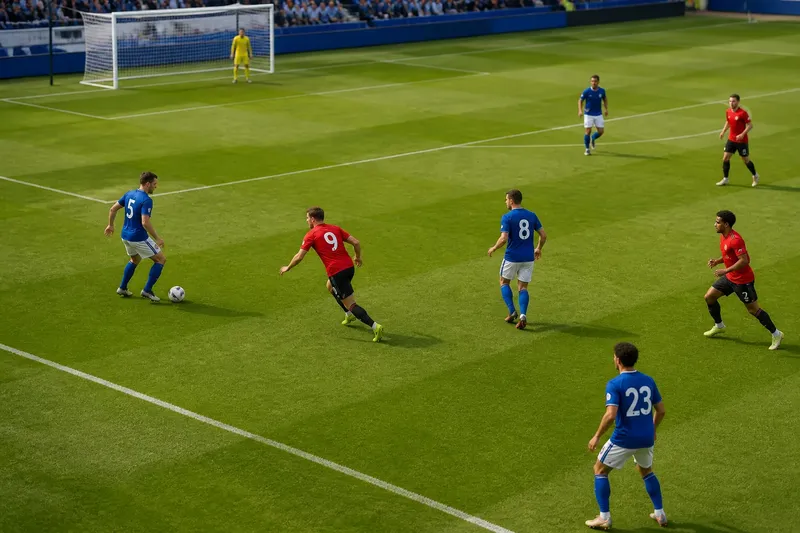
A centre-back receives the ball near the edge of the penalty area as a forward runs toward him. The midfielder nearby looks available, but the forward’s angle makes a pass to that player harder to use. That is the basic idea behind pressing: a team shapes the opponent’s choices by making some passes feel risky or inconvenient.
In soccer, pressing is more than sprinting toward the ball. Players work together to reduce the ball carrier’s useful options, perhaps encouraging a backward pass, a difficult kick, or a reception that is easy to challenge.
Find the ball carrier’s easiest short pass
As a build-up begins, locate the player with the ball and identify the simplest nearby pass. It might be to a centre-back, a fullback on the same side, or a central midfielder who has moved toward the ball. “Easy” describes the apparent route and receiver, not a certainty that the pass will succeed.
Then look at the space between passer and receiver. A defender may occupy the route, or a forward may be moving into it. Even when the lane appears open, the receiver could be under pressure by the time the ball arrives.
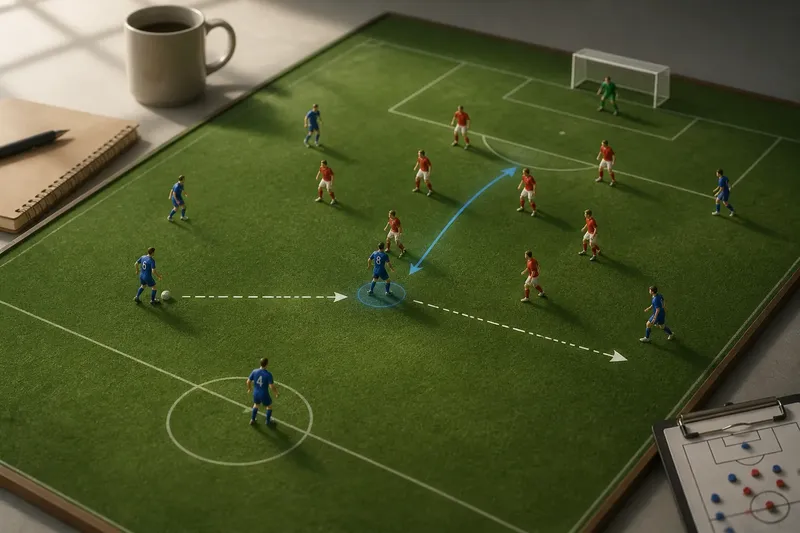
Imagine a centre-back has the ball and a midfielder stands slightly ahead and to one side. A forward approaches at an angle that puts the midfielder behind the forward’s path. The pass remains possible, but the midfielder may have little room to turn, making the option less useful than it first appeared.
Read the presser’s angle and cover shadow
A direct sprint at the ball carrier can leave an easy pass around the presser. An angled approach can apply pressure while discouraging a pass to a particular receiver. The pressing player’s position may block that route without requiring a tackle.
This obstructed space is often called a cover shadow: the area behind a defender that is difficult to pass through because of the defender’s position. As the presser moves, the shadow shifts. Trace a likely pass from the ball to its receiver and see whether the presser’s body and path interfere with it.
The aim is not always to shut every route. A forward may guide the ball carrier toward the touchline, where the boundary limits one direction of escape, while a teammate moves toward the likely receiver.
Think of the presser as a chair placed in a hallway: people can still move, but the easiest route has changed. The analogy is imperfect because players and the ball move, yet it helps explain why position can matter as much as speed.
Check how teammates cover the next options
One player can discourage a pass, but coordinated pressing depends on nearby teammates responding to the same cue. As the first defender approaches, a midfielder might move toward a central receiver while a winger blocks the route to a fullback.
The ball carrier may then see one option affected by the presser, another covered by a teammate, and a third leading toward the sideline or into traffic. The team does not need a defender close to every opponent if it can make the quickest useful passes difficult.
Timing matters. If a teammate steps forward too early, the opponent may pass into the space left behind. If that teammate waits until the ball has travelled, the receiver may have time to turn. Watch whether teammates move as the pass is played and close the receiver’s likely next option.
Also check the far side. A pressing team may leave a distant opponent less closely marked while it shifts toward the ball. The question is whether the ball carrier can reach that player quickly and safely, not whether every opponent is covered at every moment.
Follow the receiver after the pass
When the ball moves, reset your attention around the new receiver. The first presser may no longer be the main actor; a nearby teammate now has to restrict the receiver’s choices. Find the next short pass that player would like to make.
A poor first touch, a reception with the player’s back to the field, or a touch near the sideline can give defenders a moment to close in. Pressure can shape the play even without winning possession if the receiver is hurried into a backward or awkward pass.
If the receiver controls cleanly and turns into open space, the first line of pressure may have been bypassed. Watch whether the pressing team retreats to rebuild its shape or whether nearby defenders step up to challenge the next pass.
Say you are watching a team press a goalkeeper’s short distribution. The striker runs toward the goalkeeper while angling away a pass to one centre-back; a winger moves toward the other defender, and a midfielder shadows the central receiver. If the goalkeeper passes wide and the fullback receives facing the touchline, the visible result to look for is a restricted next pass, not necessarily an immediate tackle.
Tell a pressing trap from a press that has been beaten
A pressing trap can make a pass appear available so defenders can close around the receiver once the ball travels. Look for coordinated movement after the pass: players converge on the receiver or block the obvious next outlets.
Not every pass into pressure is a trap. A teammate may be late, or the passer may have found a route the defenders did not expect. To distinguish a deliberate trap, look for a sequence in which the team leaves an option tempting, positions players to challenge it, and then limits the receiver’s next action.
A press may be beaten when the ball travels through a route before a teammate closes it, or when a receiver moves outside the cover shadow. If the opponent advances with control and the pressing players are left behind the ball, the first pressure has lost its intended effect.
Effort alone does not tell you whether a press is working. Watch whether the defenders reduce clear routes forward or leave space that the opponent can use to advance.
Which pressing cues answer common viewer questions?
Why does a forward approach from an angle?
An angled run can pressure the ball carrier while discouraging a pass to a nearby receiver. Check whether the forward’s position puts that receiver in the cover shadow.
Why might one opponent appear free?
The apparent option may require a slow or difficult pass, or the receiver may be likely to face pressure immediately. The pressing team may prefer that route to a quick pass through the centre.
What does a backward pass tell you?
It can suggest that forward routes were difficult to use, but it does not prove the press succeeded. Check whether the pressing players remain close enough to challenge the next attempt to build forward.
How can you tell when the press has been bypassed?
Look for an opponent receiving beyond the first line with time to face forward. If that player can advance or pass onward while the pressers are behind the ball, the original pressure has been bypassed.
Use a simple viewing sequence without losing the play
Choose one build-up and keep track of a small part of the field: the ball carrier, the nearest short-pass option, and the next receiver. Follow the presser’s angle, notice which teammate covers another route, and then check whether the receiver can turn or must play backward.
For example, imagine a centre-back has the ball, a midfielder is the nearest short option, and a forward angles across the route to that midfielder. A teammate steps toward the fullback as the centre-back passes wide. The fullback receives facing the touchline and cannot turn forward, so the observable result is that the press has steered play toward a less useful position; if the fullback instead turns into open space, the forward’s route did not control the next action.
To read pressing during a match, follow the nearest two or three passing lanes rather than trying to track every player. This keeps the focus on the question that matters: after the press shifts the ball, does the receiver have a clear next action, or has the team made that choice harder?