The Myth That More Possession Always Means More Control
Learn to read soccer possession as a match unfolds, spot when a team turns the ball into a real attacking threat, and judge how the score changes its choices.
A team passes between its center backs while the other side waits in a compact shape. The broadcast says the passing team has had more of the ball, but the game still feels comfortable for its opponents. To read soccer possession as a match unfolds, notice what each spell produces: territory, a chance, a change in shape, or a safe reset.
Distinguish possession from control
Possession means a team has the ball; control is a judgment about its influence over the match. A team can pass safely without entering dangerous areas, while an opponent with fewer touches can defend well and attack into open space.
Think of possession like a set of keys: holding them does not matter as much as which doors they open. A pass that reaches a forward in space may create a new route toward goal; another pass may simply return the ball to a defender.
Neither pattern tells the whole story by itself. Check the score, the location of the ball, and what each team can do next before deciding which side is shaping the game.
Read attacks through their outcomes
Follow an attack from the moment a team moves forward to the point where it must shoot, cross, turn back, or lose the ball. Notice whether a pass reaches a player facing goal, whether a teammate offers a follow-up option, and whether the defense has to change its shape.
Possession near the opponent’s goal can still be harmless if defenders keep the central route covered and the ball carrier has no useful option. Conversely, a quick pass into open space after a turnover may create a threatening attack before the defending team can recover.
Compare how often each side gets from possession to a meaningful next action: a shot, a dangerous delivery, or a pass that puts an attacker behind the defense. The comparison is not a scorecard; it helps separate activity from the ability to make an attack develop.
Use match phases to make a fair comparison
Teams often change their approach as the game develops. A side that is ahead may accept more defending and look for a counterattack, while a trailing team may send more players forward and leave space behind them.
Rather than judging the entire match from one spell, compare what each team is trying to do in similar situations. Watch how each builds from the back, responds after losing the ball, and manages the moments when play is stopped or restarted.
- When a team builds from the back: If defenders can find a midfielder facing forward, then watch for a developing attack; if opponents block that route, then note whether the team can use a different outlet or must play long.
- When the ball reaches the attacking third: If an attacker can receive facing goal with support nearby, then follow the shot or final pass; if defenders crowd the ball and cover the center, then see whether the attack is recycled without a chance.
- After a turnover: If the team that wins the ball has open space ahead, then watch whether it can move forward; if the opponent closes that space quickly, then note whether the attack stalls or turns back.
- When the score changes: If the leading team begins protecting space and making fewer forward runs, then read its possession as cautious game management; if it keeps pushing forward, then consider whether it is still seeking another goal.
- After a substitution or shape change: If a new player appears in a different lane or the team changes its formation, then compare the next attacks with the earlier pattern; if the same routes remain blocked, then note that the adjustment has not yet changed the available options.
- During a set piece: If a corner or free kick gives attackers a clear chance to challenge for the ball, then assess the resulting shot or clearance; if defenders win the first ball, then watch whether the attacking team can retain it or must retreat.
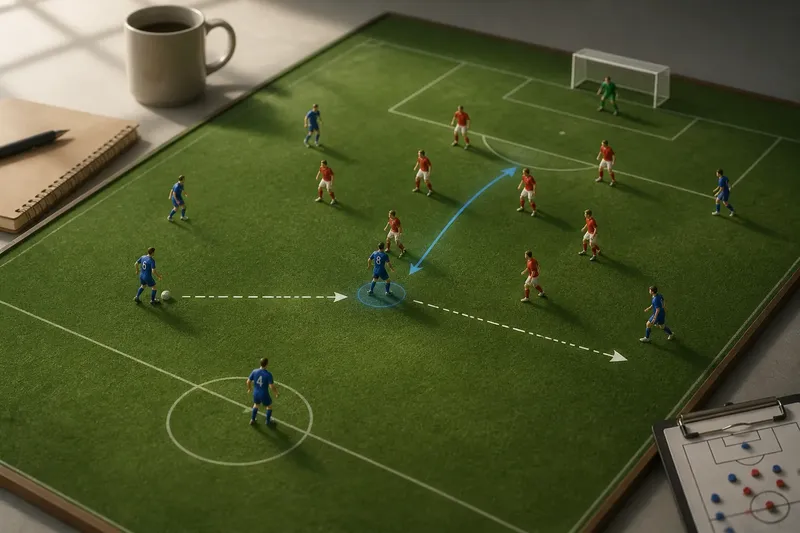
Say a fictional team is level with its opponent and keeps the ball among its center backs, but cannot find a midfielder facing forward. Its coach moves a wide midfielder closer to the center, and a defender then passes into that player, who turns and sends a teammate toward the penalty area. The observable change is that the team has created a forward route and forced the defense to respond; whether it has taken control depends on what happens in the next phase, not on that pass alone.
How should you interpret common possession patterns?
Can a team control a match without much possession?
Yes. A team may keep its defensive shape, limit dangerous attacks, and use turnovers to move forward quickly. Look at whether it can repeat those actions and make the opponent adjust, rather than treating a low share of the ball as proof of weakness.
Does possession near goal always create pressure?
No. Defenders may have the central space covered, and the ball carrier may have no route to shoot or find a teammate. Follow the next action: a useful opening, a forced retreat, or a safe pass backward tells you more than location alone.
How can you tell whether an attack is progressing?
Check whether the ball or a player reaches a more dangerous space and whether teammates remain available for the next action. A forward pass to an isolated player may stop the attack, while a sideways pass that draws a defender aside may help create a route forward.
Why might possession change after a goal?
The team in front may defend deeper, giving its opponent more of the ball, while the trailing team takes greater attacking risks. Compare each side’s behavior before and after the goal to see whether the change reflects a new plan or simply a temporary spell.
Judge control by the match’s changing choices
As play develops, notice whether each team can turn its preferred approach into a useful next action. One side may build patiently and create chances through combinations; another may stay compact and make its best attacks after winning the ball. Those are different routes to influence, not evidence that one team must dominate every phase.
Soccer possession is easier to interpret when you compare what teams attempt with what their opponents allow. A new route, a forced defensive adjustment, or a counterattack that reaches open ground can change the match’s choices; a spell of safe passing may not. Keep the judgment open until the next phase shows whether either team can build on its advantage.